Ideogram Vector: editable SVG artwork and export checks
What Ideogram Vector creates, how editable SVG differs from a raster image, and what to check before using generated artwork in print or branding.
Less noise.
More making.
Putting together your next good read…
What changed in creative AI, why it matters, and where to read the original announcement.
107 stories · Sources includedWhat Ideogram Vector creates, how editable SVG differs from a raster image, and what to check before using generated artwork in print or branding.
Block's Dessa learns from speech and listens while talking. Understand local Mac requirements, the waitlist and how to assess conversational latency.

MiniMax M3.1 Flash's launch pricing explained with token-cost arithmetic, practical agent evaluation and checks before granting tools access.

What Mercury 3's diffusion approach, 1M context and token prices mean for applications, plus a checklist separating throughput from end-to-end latency.
Understand Fibo 2.0 Dev versus Edit Turbo, structured VGL prompts, masked edits and BRIA's non-commercial weight license before choosing a workflow.
Tencent's Hy-Nomas supports text and camera-controlled video worlds. Review model assets, Linux dependencies, low-memory configuration and consistency tests.
Hi3D 1.0 refines a coarse mesh using a reference image. Separate v3 texture claims from the 1.0 release, GPU requirements and custom license.

PURE improves Pi3, DA3 and VGGT 3D reconstruction by post-training on unlabeled video. What it changes, its demo limits and how to evaluate geometry.
Explore Sage-A1.5's 35B MoE design, local serving paths and research evaluation without treating model benchmarks as validated scientific discoveries.
Compare Ming 3.0 TTS 0.5B and Tiny, understand separate speech task modes, and plan a pronunciation and voice-permission check before local deployment.
Understand Viggle JST-2's physics-native tokens, hosted scene and character generation, and the distinction between learned motion and rule-based collisions.
Examine SKY-001's engineering world model, CAD and BIM claims, waitlist access and the geometry checks needed before treating a generated design as usable.
Understand MemTensor's MemT 1.0 native-memory models, Flash and Nano differences, saved memory states and a practical test for reliable agent recall.
Identify inclusionAI's official Ling 3.0 Flash Santé repository, distinguish checkpoint storage from runtime memory, and plan compatibility checks without invented benchmarks.
Read FastH3 Omni's reference-guided video release, distinguish GB200 and desktop latency results, and compare local GPU recipes with their stated limitations.
Compare Underdog Bark 3's verbatim and Clean transcription, English-only scope, model downloads and runtime memory before choosing a local speech-to-text setup.
Understand Tencent's WeVisOne-VL, its 2B and 4B releases, pixel outputs and absent-object handling, with a practical visual-grounding evaluation checklist.
Carbon-X combines DNA and language in a 14.8B model. Learn its research limits, runtime requirements and a cautious approach to evaluating existing sequence annotations.
Kimi K3.1 Pro introduces a million-token context and Highspeed option. Separate current hosted access from the announced November 4 weights release.
Claude Duet is a proactive assistant preview for US Pro and Max users by waitlist. Understand access, shared usage and sensible connected-app evaluation.
OpenAI, PerturbAI and Scripps used distributed agents to interpret mouse-brain data. Learn what the study reports and why a research lead is not a treatment.

Drama 3 adds natural-language delivery directions, sounds and scoped word effects. Check preview limits, voice permissions and cost per usable take.

Understand Matrix-Game 4.0's engine, coding agent and video renderer. Read the preview status and test state consistency before comparing latency claims.
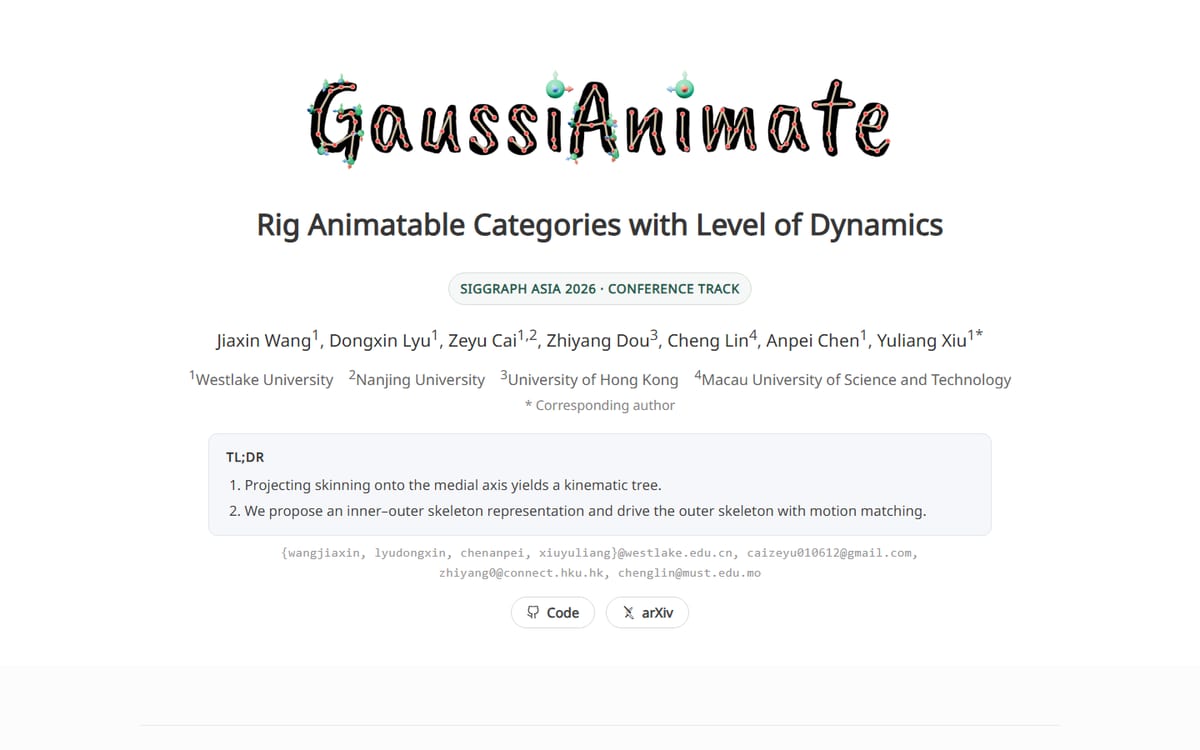
GaussiAnimate reanimates reconstructed moving subjects with a skeleton-plus-surface rig. What it needs as input, what it does and where its limits are.